Back to BlogAgentic Coding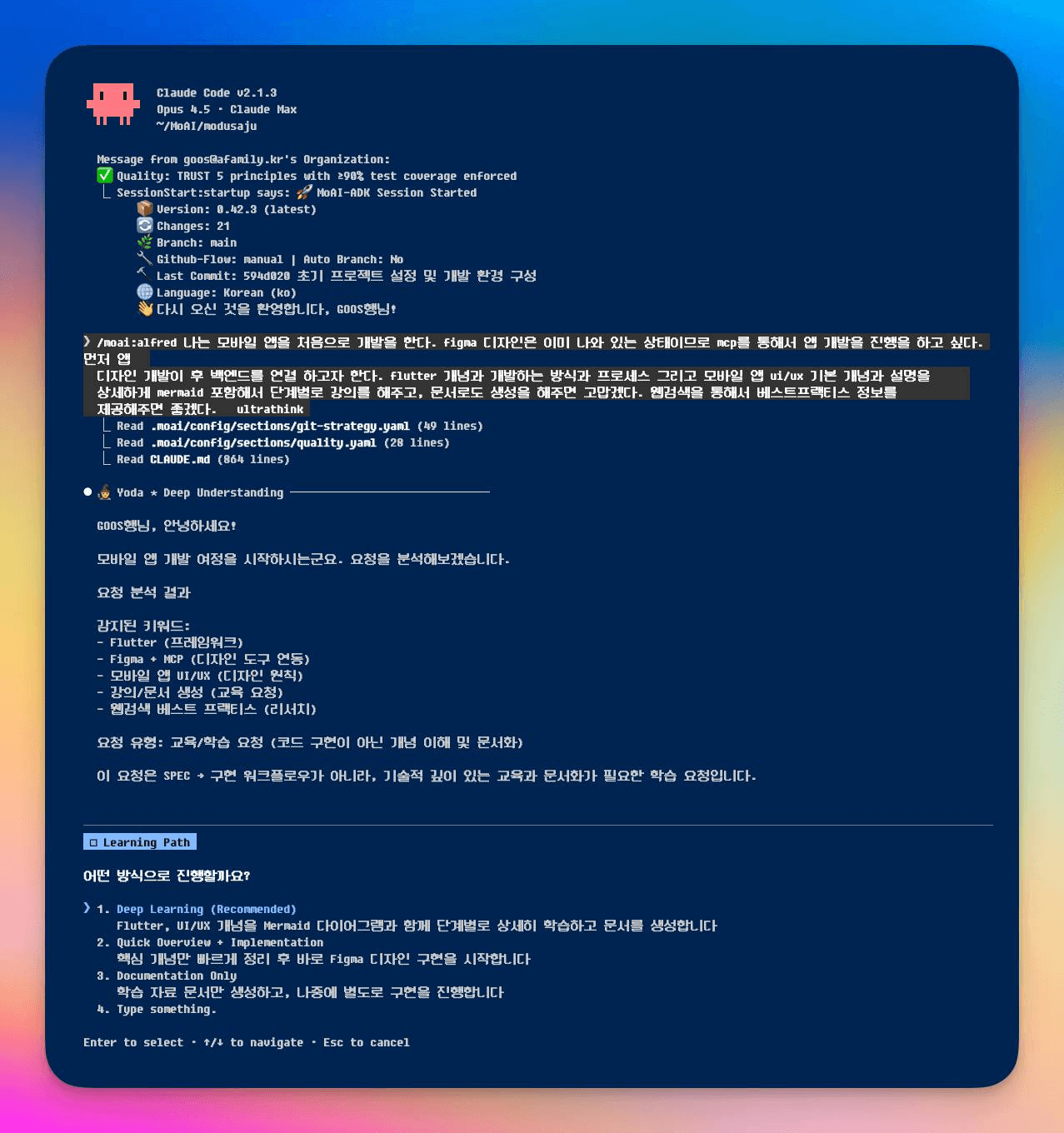


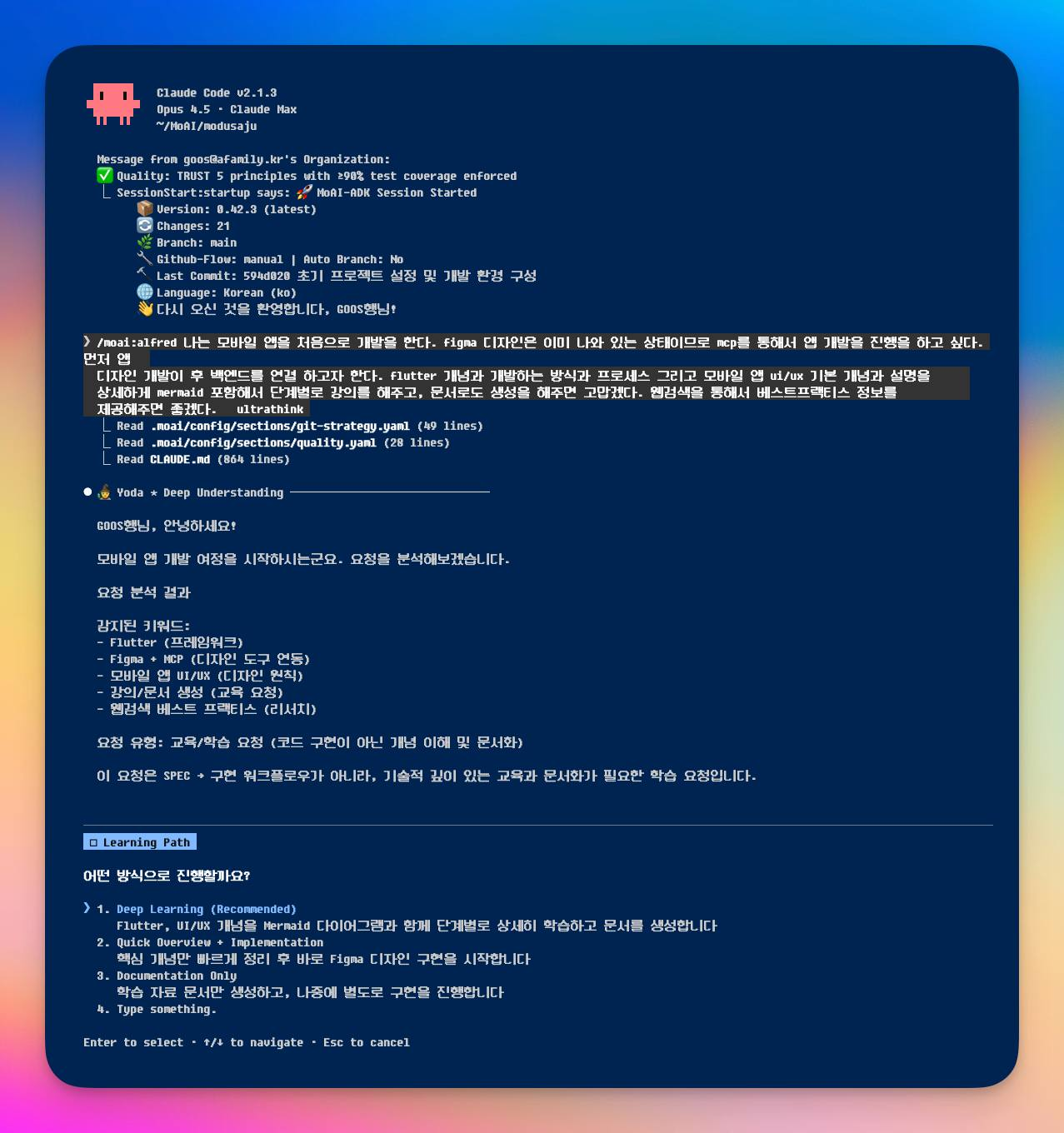 Yoda Learning Analysis - Screen showing Yoda mode analyzing learning request
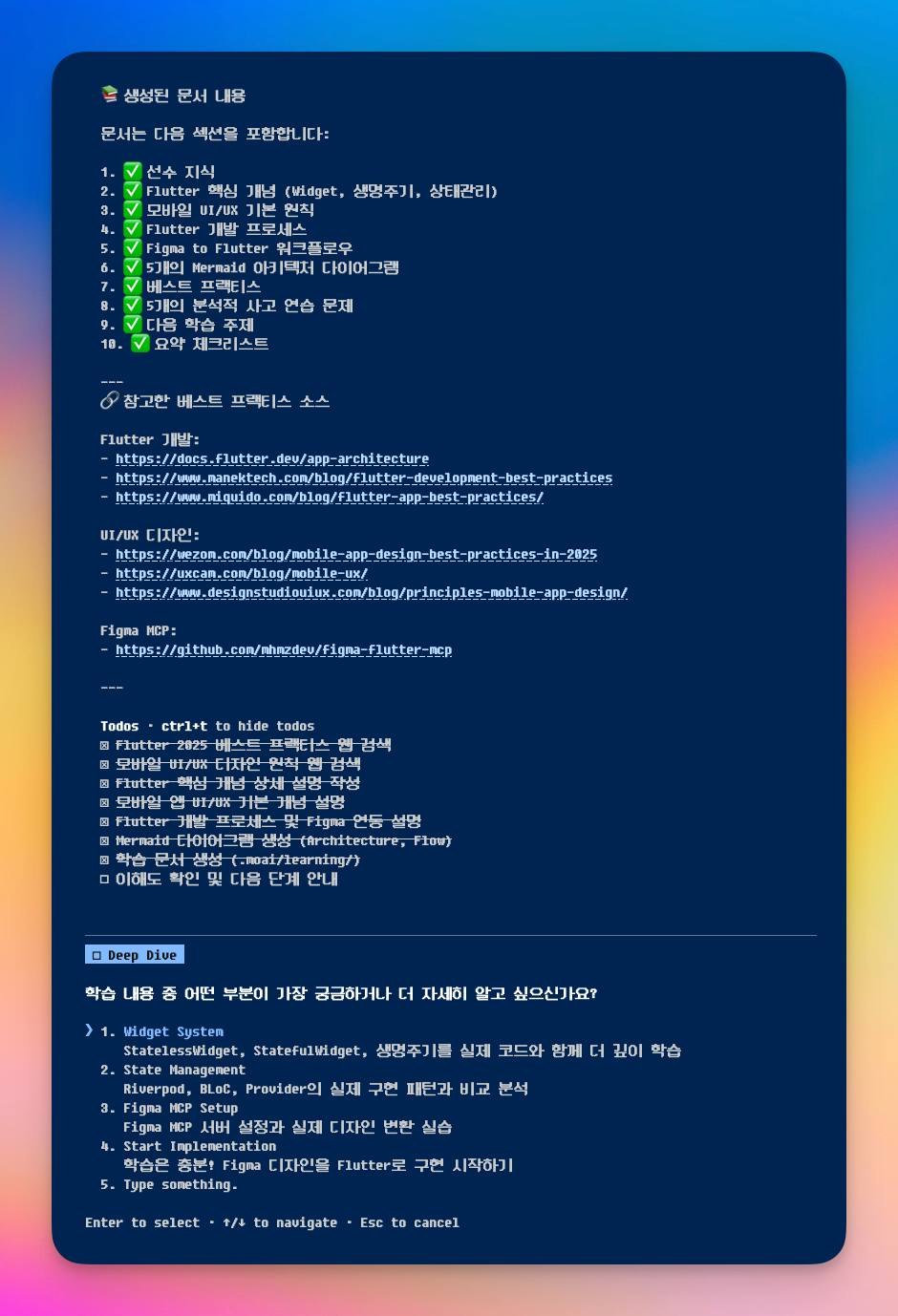 Yoda Learning Result - Summary of generated learning document and next step selection
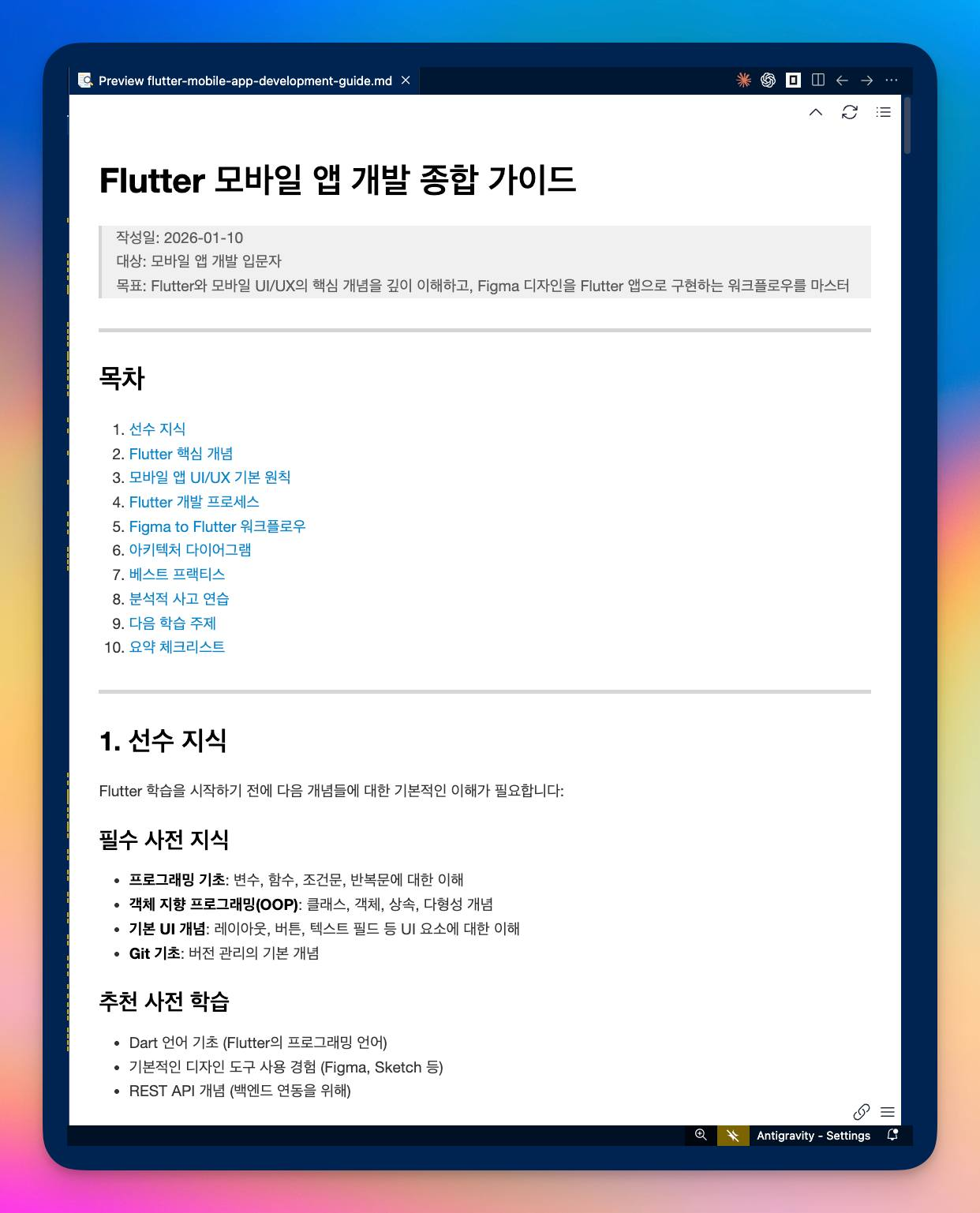 Flutter Guide Preview - 724-line Flutter comprehensive guide document
Learning Agentic Coding from The Matrix: How to Learn New Technologies with AI
5.51min
Agentic CodingClaude CodeSkillsMoAI-ADKAI LearningMatrixFlutter
Explaining Claude Code Skills and MoAI-ADK through The Matrix's helicopter manual download and kung fu training scenes from 1999. Practical tips on learning new technologies with agentic coding.
The Best Analogy for Agentic Coding
In agentic coding lectures, I often reference two scenes from The Matrix movie. While Gen Z students need some context, Gen X developers immediately nod in agreement. It's because concepts from a 1999 sci-fi film provide the most intuitive analogy for explaining the 2026 development environment.
Helicopter Manual = Claude Code Skills
The first scene is Neo and Trinity's rooftop escape sequence. There's a helicopter, but no one knows how to fly it. Trinity makes a request to the operator.
"Tank, I need a pilot program for a B-212 helicopter."
Seconds later, the knowledge is downloaded, and Trinity immediately pilots the helicopter.
YouTube
Matrix - Helicopter Scene
Claude Code's Skills system serves exactly the same role as this helicopter manual.
It's a method of loading precise knowledge at the exact moment it's needed. When you need Flutter, load
Skill("moai-lang-flutter"). When you're curious about Rust syntax, call Skill("moai-lang-rust"). The only difference is that the download target is the AI agent's context rather than a brain.Loading diagram...
The same concept of injecting needed knowledge at the needed moment
The key point is Just-in-Time learning. Instead of studying for years in advance, you load knowledge when you hit a roadblock during a project and immediately move to the next step.
Kung Fu Training = MoAI-ADK Output-style Modes
The second scene is the sparring between Morpheus and Neo. In a virtual simulation space, Neo downloads dozens of martial arts and delivers his famous line.
"I know Kung Fu."
Morpheus responds: "Show me."
YouTube
Matrix - I Know Kung Fu Scene
What this scene demonstrates isn't just knowledge transfer, but hands-on training. Morpheus serves as both teacher and sparring partner. It's a process of learning through practice, not just theory.
MoAI-ADK's Output-style modes correspond to this training system.
- R2D2 Mode: Writes code together like a pair coding partner. You provide direction, AI implements it, and you adjust based on results—a real-time collaboration approach.
- Yoda Mode: Works like a personal tutor, explaining concepts, showing examples, conducting practice sessions, and providing feedback.
Loading diagram...
Alternating between learning and implementation with Yoda and R2D2 modes
Practical Tips: Starting a Flutter Project
That's enough theory. Let me share a real usage example.
Let's assume you need to develop a mobile app with zero Flutter experience. The Figma design is already ready, and you can read Figma data through MCP (Model Context Protocol).
Make the following request using the
/moai:alfred command.Bash
/moai:alfred I'm developing a mobile app for the first time.The figma design is already done, so I want to proceed with app development through mcp.I'd appreciate it if you could provide detailed lectures step-by-step on Flutter concepts,development methods and processes, and basic mobile app UI/UX concepts and explanations,including mermaid diagrams, and also generate documentation.
Alfred invokes the manager-strategy agent, and the Output-Style is set to Yoda Master mode.
Yoda Learning Analysis - Screen showing Yoda mode analyzing learning requestAfter about 10 minutes, a comprehensive 724-line guide is generated.
- Flutter Widget lifecycle
- StatelessWidget vs StatefulWidget differences
- Provider, Riverpod, BLoC state management pattern comparison
- Figma MCP workflow
- Layout system (Row, Column, Stack)
- Responsive design principles
- Material Design vs Cupertino components
Yoda Learning Result - Summary of generated learning document and next step selectionFlutter Guide Preview - 724-line Flutter comprehensive guide documentYou don't need to read everything thoroughly. Understanding Widget concepts, state management methods, and Figma data integration is sufficient.
Then switch to R2D2 mode and start actual implementation.
Bash
/moai:2-run --mode r2d2 "Implement Figma design as Flutter app"
If you instruct "let's start with the login screen," the AI creates TextField Widgets, applies styles, and positions buttons. When you provide feedback like "button color differs from Figma" or "padding is too narrow," it immediately makes corrections.
Learning happens naturally during this process. You learn concepts like how EdgeInsets controls padding, how to use the Color class, and what setState does by examining the code.
When stuck, switch back to Yoda mode.
Bash
/moai:alfred "How do I make API calls in Flutter?Explain HTTP package usage with examples."
Once the HTTP communication guide is generated, return to R2D2 mode and implement API integration.
The Change in Learning Order
Here's the difference between traditional learning approaches and the agentic coding approach.
- Traditional approach: Study Dart syntax → Flutter basics course → Widget catalog learning → Understand state management patterns → Start project
- Agentic coding approach: Start project → Learn Widgets when needed → Learn state management when stuck → Grasp Dart syntax while building
The learning curve doesn't disappear. However, AI assists with the steep initial phase. The difference is that instead of receiving code chunks to copy-paste, you receive a systematic learning path and understand step-by-step while implementing.
Loading diagram...
The shift toward lowered boundaries between specialized domains
Conclusion
The two scenes from The Matrix intuitively explain the core concepts of agentic coding.
- Helicopter manual download → Claude Code Skills: Load needed knowledge at the needed moment
- Kung fu training simulation → MoAI-ADK Output-style modes: Learn with Yoda mode, build with R2D2 mode
The advertising slogan "you can build apps without knowing how to code" is an exaggeration. However, "you can learn while simultaneously building" has become possible. The order has changed, and the entry barrier has lowered.
Learn when needed, build while learning, and learn again while building. This cycle is the essence of agentic coding.
"I know Flutter."
Now you can say this.